by Tae Hyun Kim
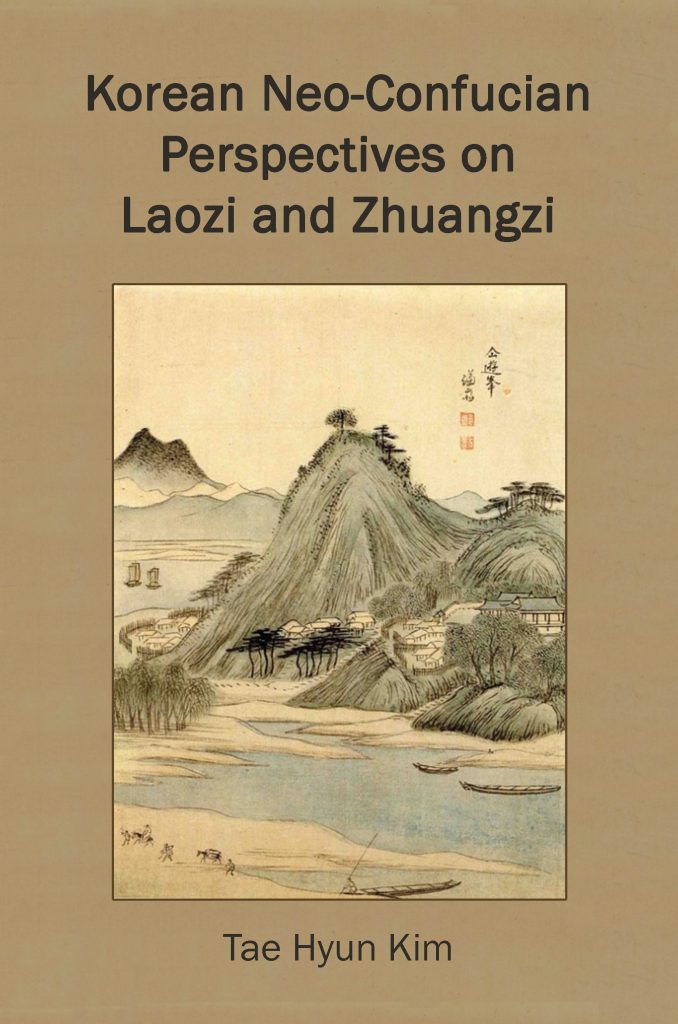
This book offers the first complete English study and translations of two landmark Chosŏn commentaries to Daoist classics: Yi I’s Sunŏn (Purified Words) on the Laozi and Han Wŏnjin’s Changja pyŏnhae (Analytic Interpretation of the Zhuangzi). Yi I (1536–1584), one of Chosŏn’s most influential thinkers, defied prevailing Neo-Confucian orthodoxy by treating the Laozi as a sage’s text, reorganizing it into forty sections and demonstrating how Daoist insights harmonize with Confucian ideals of self-cultivation and governance. Han Wŏnjin (1682–1751) interprets the Zhuangzi as heretical and seeks to refute it as he defends the Neo-Confucian worldview. His work represents one of the most rigorous Neo-Confucian engagements with the Zhuangzi in East Asia. By making these works accessible in English for the first time, this book opens critical resources for the study of Daoist–Confucian dialogue, offers fresh perspectives on Korean philosophy and religion, and enriches East Asian intellectual history.
Paperback: US$35.95 plus S & H; PREPUBLICATION SPECIAL US$ 28.50, plus S & H
PDF file $20.00, sent via email attachment within 24 hours — AVAILABLE 15 April 2026
The Author: Tae Hyun Kim, PhD (UC Berkeley), is an independent scholar translating pre-modern East Asian texts that remain largely unknown in the English-speaking world.
Praise
The influence of Lao-Zhuang thought on the development of Korean Neo-Confucianism remains an important yet largely overlooked topic in Western scholarship—just as the Neo-Confucian reinterpretation and reorganization of the Daoist classics has received far too little attention. This book takes a significant step toward remedying this gap. By presenting original texts alongside insightful commentary, it opens a new path not only for understanding Korean intellectual history but also for deepening our appreciation of the classic Daoist tradition. —Robin R. Wang, Professor of Philosophy and Director of Asian Pacific Studies, Loyola Marymount University
This book translates commentaries on Daoist classics by two major figures in Korea’s Neo-Confucian tradition, documenting the encounter and striking overlap of two of East Asia’s major traditions. The overlap is the shared vision of human self-centeredness as what blocks us from what should be innate responsiveness to the Way of all things and affairs. Yi I finds shared wisdom in how the Daode jing frames this problem and suggests the qualities cultivated to overcome it. Han Wŏnjin analyzes the vision and sage cultivation of Dao in the Zhuangzi, noting much verbal overlap masking a critical divergence between the Neo-Confucian and Daoist understanding of these matters. Both commentaries offer rich insight into a shared but differently developed heritage envisioning the fullness of human perfection. Tae Hyun Kim’s excellent scholarly framing of these two key Daoist commentaries allows them to speak beyond the translated texts to disclose the differing cultural and philosophical contexts of the early and later years of Korean Neo-Confucianism. Extensive introductions to each text explore the milieu in which they originated and the larger intellectual background and motivations of their authors. Each translation is richly footnoted for both manuscript variations and a wide array of references to figures and stories now opaque to most readers. Scholars will find the passage-by-passage interlinear layout of the Chinese original text and its translation an excellent help. Three Pines Press is to be congratulated for this publishing format which enhances a work of rare scholarship and value.—Michael Kalton, Professor Emeritus, School of Interdisciplinary Arts and Sciences, University of Washington, Tacoma